


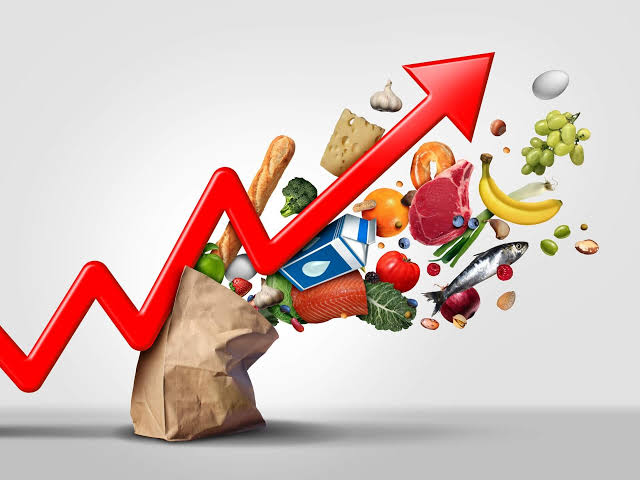
Kenya’s inflation rate has moved to 6.8 per cent in September 2026, up from 6.6 per cent in August, marking the third consecutive monthly increase and the highest reading since January 2024. On the surface, the 0.2 percentage-point increase may appear modest. For households and businesses operating on already-tight margins, however, the significance is considerably larger.
The more important question is not simply why inflation has risen, but what this tells us about the Kenyan economy.
The latest numbers reveal an economy caught between two competing forces. On one side is the need to maintain price stability and protect purchasing power. On the other is the need to lower the cost of credit, encourage private investment, expand production and support economic growth.
That tension sits at the centre of Kenya’s economic story going into the final quarter of 2026.
The household economy tells the real story
Macroeconomic statistics can sometimes make inflation look abstract. For an ordinary Kenyan household, however, inflation is experienced at the supermarket, petrol station, school and restaurant.
Food inflation reached 9.5 per cent in September and contributed 2.8 percentage points to the overall inflation rate. Transport costs were up 15.6 per cent year-on-year. Housing, water, electricity, gas and other fuels rose by 3.2 per cent.
These categories matter because they represent expenses that households cannot easily postpone.
A family can delay buying a new television. It cannot easily decide not to eat, travel to work or pay school fees.
This is where the distinction between headline inflation and lived inflation becomes important. A household whose expenditure is heavily concentrated on food and transport can experience a significantly greater squeeze than the headline 6.8 per cent figure suggests.
And this has a microeconomic consequence: households change behaviour.
Consumers begin substituting expensive products for cheaper alternatives, reducing discretionary purchases, buying smaller quantities or switching retailers. Businesses, meanwhile, face a different calculation: whether to absorb higher costs, raise prices, reduce margins or cut expenditure elsewhere.
That seemingly small decision repeated across millions of transactions becomes a macroeconomic phenomenon.
Food inflation exposes a structural problem
Kenya’s food inflation is particularly important because much of it cannot be solved simply by raising interest rates.
Interest rates can influence demand, borrowing and investment. They cannot produce more milk, maize, vegetables or wheat overnight.
The September data illustrate this clearly. UHT milk, fresh milk, cabbage and wheat flour all recorded significant monthly increases, while tomatoes, maize flour and sugar moved in the opposite direction.
This volatility points towards a deeper supply-side challenge.
Kenya needs to think beyond simply producing more food. The country needs efficient agricultural supply chains—from farm inputs and irrigation to storage, transport, processing, wholesale markets and retail.
Post-harvest losses, expensive logistics, fragmented markets and unpredictable weather can all translate into higher consumer prices.
Investment in cold-chain infrastructure, warehousing, irrigation, agro-processing and rural roads may therefore have a greater long-term impact on food-price stability than short-term interventions aimed solely at consumer prices.
This is where economic policy and private investment intersect.
The CBK faces a difficult balancing act
The September inflation figure arrives at an important moment for monetary policy.
The Central Bank of Kenya has maintained the Central Bank Rate at 8.75 per cent, after reducing rates from higher levels earlier in the year. Its challenge is straightforward in theory but difficult in practice: keep inflation contained without unnecessarily restricting economic activity.
Higher interest rates can help contain inflationary pressure by making borrowing more expensive and moderating demand. But there is a cost.
For a manufacturer considering a new production line, a property developer financing a project, an SME seeking working capital or a household seeking a mortgage, the cost of money matters.
If credit remains expensive for too long, investment decisions can be postponed.
That is why Kenya’s current inflation story cannot be separated from the country’s credit story.
Recent banking-sector data show that lenders have been expanding financing to small and medium-sized businesses, with the Kenya Bankers Association reporting that banks had already surpassed their initial 2026 target for MSME lending by June.
The opportunity is significant. MSMEs are among the largest engines of employment and commercial activity in Kenya. But access to credit is only productive when businesses can generate sufficient returns to service that credit.
For investors, inflation changes the equation
Inflation also changes how investors assess Kenya.
For local investors, the first consideration is real return.
An investment generating 8 per cent nominally when inflation is 6.8 per cent does not provide an 8 per cent increase in purchasing power. The real return is considerably smaller before taxes and other costs.
This makes the investment environment more complicated for savers and investors who traditionally depend on fixed-income products.
For businesses, inflation creates another question: pricing power.
Companies selling essential goods or services may be better positioned to pass some increased costs to consumers. Businesses operating in highly competitive markets may not have that luxury.
This makes productivity increasingly important.
A company that can produce more with the same workforce, reduce energy consumption, improve logistics or use technology to lower operating costs can protect its margins without passing the entire increase to consumers.
In other words, inflation can accelerate the economic value of efficiency.
Government policy needs to move beyond managing symptoms
Kenya’s policy debate should therefore extend beyond whether inflation is 6.6, 6.8 or 7 per cent.
The larger question is: what is causing prices to remain vulnerable to shocks?
There is a strong case for policies that expand domestic productive capacity.
Agriculture is one area. Manufacturing is another. Energy, logistics, housing, technology and healthcare also present opportunities.
Investment incentives should increasingly reward activities that increase supply rather than simply consumption.
For example, investment that expands food processing capacity can simultaneously create jobs, improve farmers’ markets and reduce dependence on imported processed products. Investment in logistics can reduce the cost of moving goods. Renewable energy and efficient power systems can reduce exposure to energy-price volatility.
This is the difference between fighting inflation after it happens and building an economy that is less vulnerable to inflation in the first place.
Fiscal policy remains equally important
Monetary policy cannot carry the entire burden.
The government also has to balance development spending, public debt obligations, taxation and private-sector confidence.
An economy needs public investment in infrastructure, education, health and productive capacity. But excessive fiscal pressure can have consequences for households and businesses, particularly when taxation and government borrowing compete with private-sector financing.
The objective should therefore be to create an environment where public spending crowds in private investment rather than crowds it out.
For investors, policy predictability can sometimes matter as much as the headline tax rate.
A business can plan around a known tax burden. It is considerably harder to plan around uncertainty over taxes, regulations, government payments, import requirements or policy direction.
What does 6.8% mean for Kenya’s future?
The latest inflation number should neither be treated as an economic disaster nor dismissed as insignificant.
It is a warning that the disinflation gains of previous periods remain vulnerable to food, energy, transport and external shocks.
There is also an encouraging element in the data. Core inflation stood at 4 per cent, while non-core inflation was much higher at 14 per cent, suggesting that volatile components remain a substantial source of overall price pressure.
That distinction matters because supply-side shocks require different solutions from broad-based demand inflation.
Kenya therefore faces a policy challenge that goes beyond the next Central Bank rate decision.
The sustainable answer to inflation is ultimately greater productive capacity.
More food production. Better storage. Cheaper logistics. Reliable energy. Competitive manufacturing. Efficient financial markets. Technology-driven productivity. Stronger SMEs. Deeper capital markets. And a predictable investment environment.
For Kenyan households, the objective is not merely to bring the inflation number down. It is to create an economy in which incomes and productivity can rise faster than the cost of living.
For businesses, the opportunity lies in becoming more productive and resilient.
And for investors, the current environment reinforces an old economic principle: the most valuable opportunities tend to emerge where an economy’s biggest constraints meet its greatest unmet demand.
Kenya’s 6.8 per cent inflation rate is therefore more than a statistic. It is a snapshot of an economy negotiating the difficult space between stability and growth, consumption and production, government intervention and private investment.
How Kenya manages that balance will matter far more than the September figure itself.