



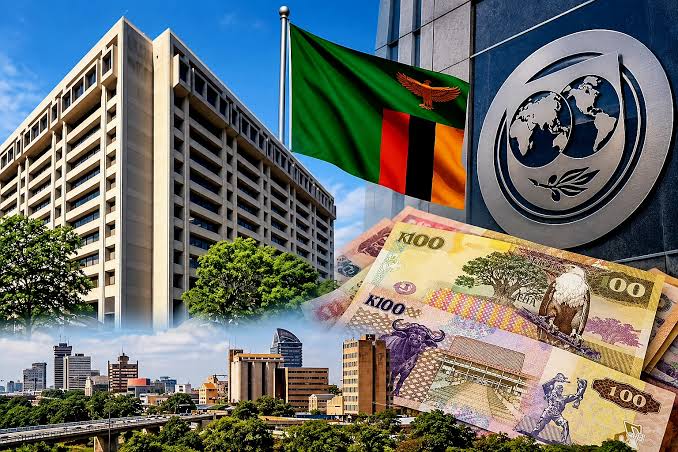
ZAMBIA has reached a staff-level agreement with the International Monetary Fund (IMF) for a proposed $1.5 billion financing programme, marking a new phase in the country’s efforts to strengthen economic stability and sustain its recovery.
The agreement was announced on October 9, 2026, following an IMF mission to Lusaka that took place between September 29 and October 9.
According to Reuters, the proposed three-year Extended Credit Facility is intended to preserve macroeconomic stability, strengthen economic resilience and support Zambia’s development objectives.
The agreement follows the expiry in January of Zambia’s previous $1.7 billion IMF programme, which supported economic reforms following the country’s sovereign debt default in 2020.
However, the proposed financing remains subject to approval by the IMF Executive Board, with a decision expected around December 2026.
If approved, the funding will be disbursed in seven instalments over three years, providing financial support as Zambia continues implementing economic reforms.
The programme comes as the government prepares its 2027 national budget amid competing demands for public investment, debt servicing and essential services.
Reuters reported that Zambia expects public spending to increase by 7 per cent in 2027.
The IMF has projected economic growth of 5.6 per cent for Zambia in 2026, supported by activity in agriculture, mining and exports.
Copper production remains central to the country’s economic outlook. The mining industry generates export earnings, supports employment and contributes to government revenue.
Agriculture also plays a significant role by supporting rural livelihoods, food production and economic activity beyond the mining sector.
Nevertheless, Zambia continues to face fiscal pressures that could complicate its recovery. The IMF has highlighted lower-than-expected revenue collections and spending by the Food Reserve Agency that exceeded budgeted levels.
These challenges illustrate the difficulty of financing development priorities while maintaining control over public expenditure.
Debt restructuring remains another important part of the country’s economic recovery strategy.
The IMF indicated that discussions with the African Export-Import Bank were close to formalisation, while negotiations with the Trade and Development Bank were continuing.
Completing outstanding debt arrangements could help improve investor confidence and create more predictable conditions for future borrowing and investment.
Following news of the proposed IMF programme, Zambia’s 2033 eurobond rose to bids of 95.82 cents on the dollar, according to Tradeweb data cited by Reuters.
The market reaction suggests that investors welcomed the prospect of renewed financial support and continued engagement with the IMF.
However, securing financing does not automatically translate into improved living standards. The government’s ability to manage public finances, strengthen revenue collection and encourage private sector investment will remain critical.
Businesses will also be watching whether economic stability leads to improved access to credit, greater investor confidence and more predictable operating conditions.
For households, the ultimate test will be whether economic growth creates jobs, supports incomes and improves access to essential services.
Zambia’s proposed IMF programme offers an important opportunity to consolidate its recovery. Sustained progress will depend on effective implementation of reforms, responsible public spending and stronger performance across productive sectors of the economy.

