



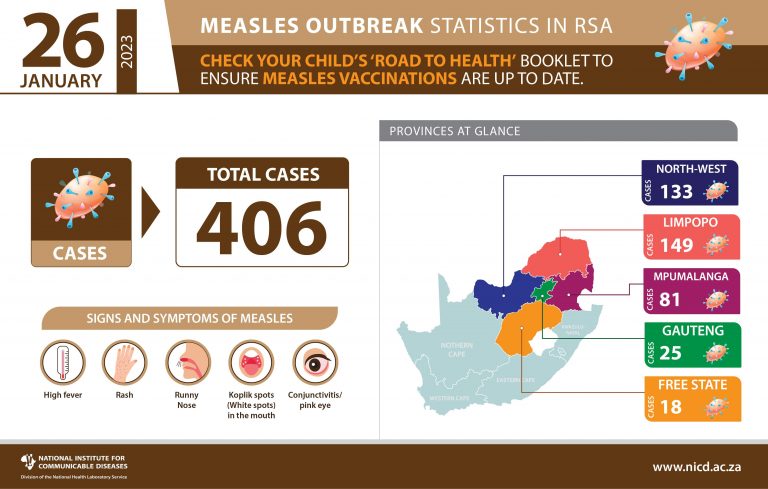
South Africa has recorded more than 6,000 laboratory-confirmed measles cases in 2026, prompting health authorities to strengthen disease surveillance and encourage vaccination to limit further transmission.
The National Institute for Communicable Diseases (NICD) reported 6,186 confirmed measles cases between December 29, 2025, and October 4, 2026.
In its weekly measles and rubella surveillance report published on October 14, the institute said 553 additional measles cases had been detected since the previous reporting period.
The figures highlight the continued public health challenge posed by measles, a highly contagious viral infection that can cause serious complications, particularly among young children and people who are not adequately protected through vaccination.
The Northern Cape reported the highest number of newly detected cases during the latest reporting period, with 124 cases. The Free State followed with 87, while North West recorded 79.
Gauteng reported 60 new cases, followed by the Western Cape with 57, Limpopo with 54, KwaZulu-Natal with 45, Mpumalanga with 40 and the Eastern Cape with seven.
The distribution of cases across all nine provinces underscores the importance of maintaining surveillance and ensuring that communities have access to appropriate immunisation services.
Measles spreads through respiratory droplets and airborne particles released when an infected person coughs or sneezes. Symptoms commonly include fever, a runny nose, cough, red eyes and a characteristic skin rash.
In severe cases, the disease can lead to complications such as pneumonia and inflammation of the brain.
The NICD has urged healthcare professionals and public health officials to strengthen measles and rubella surveillance, improve case reporting and ensure suspected infections are investigated promptly.
Laboratory confirmation and contact tracing are important components of outbreak response because they help health authorities identify cases and monitor possible transmission.
The institute has also called for stronger public awareness campaigns to build confidence in vaccines and address concerns that may prevent families from participating in immunisation programmes.
Vaccination remains a key measure for preventing measles and reducing the risk of outbreaks.
Parents and caregivers are encouraged to check children’s immunisation records and consult healthcare professionals about any missed routine vaccinations.
The NICD also reported 845 laboratory-confirmed rubella cases over the same reporting period, including 250 additional cases since the previous update.
Rubella is generally milder than measles, but infection during pregnancy can cause serious complications for an unborn baby, including congenital rubella syndrome.
The health authorities recommend vaccination in accordance with South Africa’s routine immunisation schedule.
The rising measles figures reinforce the importance of early detection, accessible vaccination services and reliable public health information.
As surveillance continues, cooperation between healthcare workers, communities and government agencies will be essential to controlling transmission and protecting vulnerable populations.

