



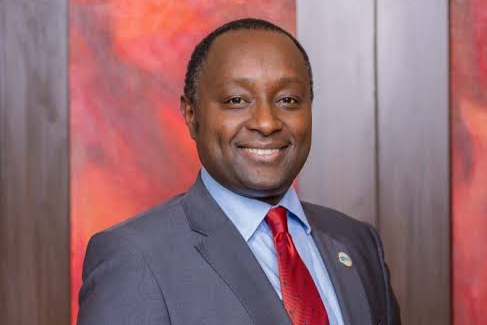
Frank Mwiti’s leadership of the Nairobi Securities Exchange (NSE) is increasingly defined by a question that extends beyond share prices: how can Kenya’s capital markets mobilise more money from investors and channel it into businesses, infrastructure and long-term economic growth?
Since taking over as chief executive in February 2024, Mwiti has been pursuing a broader transformation of the exchange, with an emphasis on attracting investors, diversifying revenue and developing products that make the market more accessible.
His appointment followed a career spanning investment banking, corporate finance and professional services. The challenge is significant. A stock exchange needs active investors, companies willing to list and products that give households and institutions compelling reasons to participate. For Kenya, it also needs to strengthen the role of the capital market as an alternative to bank borrowing and government debt.
The diversification drive is intended to reduce reliance on transaction-based income, which can fluctuate with market activity. Under Mwiti, the exchange is also seeking to turn its market data into more valuable analytical products and expand consulting services in areas such as environmental, social and governance reporting, small-business development, corporate governance and investor relations.
For businesses, the wider ambition is to make the NSE relevant at different stages of growth. While an initial public offering remains a route for established companies seeking equity capital, the exchange is also looking to broaden the range of enterprises and investment products available to market participants. Its strategy includes a target of 40 new listings and the introduction of 50 new index funds.
Retail participation is another priority. Kenya has a large population of potential investors, but many households remain unfamiliar with listed securities or find the process of investing difficult to navigate. Financial education, simpler access and a broader choice of products will be important if the exchange is to attract more individuals beyond traditional institutional investors.
Technology is expected to play a role in that effort. In August 2026, Reuters reported that the NSE was developing an artificial intelligence-focused exchange-traded fund intended to give local investors access to companies associated with the global AI industry. Mwiti said the exchange was considering a Kenyan-shilling-denominated product, while noting that market conditions would influence the timing of its launch.
The proposed product reflects a broader challenge facing African exchanges: how to provide investors with diversified opportunities locally, rather than encouraging them to seek all their exposure to international growth industries through overseas markets.
Yet product innovation alone will not determine the exchange’s long-term success. The NSE must also sustain investor confidence, attract companies willing to list, deepen liquidity and demonstrate that public markets can provide a practical alternative for businesses seeking long-term capital.
Mwiti’s background in investment banking and corporate finance gives him experience across several parts of that equation. Before joining the NSE, he held senior roles at Ernst & Young and worked in banking and capital markets advisory, including experience with international financial institutions.
His task is to translate that experience into a market that serves more than existing investors and listed companies. A stronger exchange could give businesses access to a wider pool of capital, create more investment opportunities for households and help channel domestic savings towards productive economic activity.
The measure of the NSE’s transformation will therefore extend beyond a rising market index or higher transaction volumes. It will also depend on whether more companies can raise capital, whether investors have greater access to suitable products and whether the exchange can become a more integral part of Kenya’s business financing system.
For Mwiti, the long-term question is whether the NSE can evolve from a venue primarily associated with share trading into a broader platform for investment, enterprise growth and capital mobilisation.

