



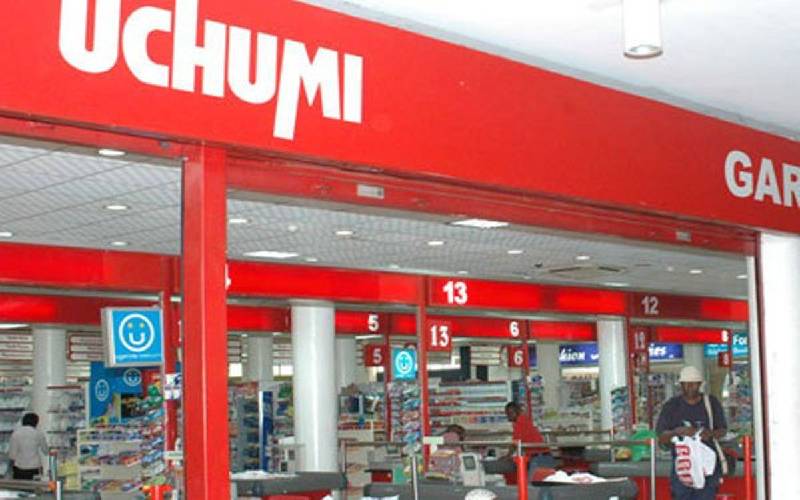
For a generation of Kenyan consumers, the supermarket has been more than a place to buy milk, bread and washing powder. It has been a marker of how the economy is changing.
There was a time when walking into a Nakumatt or Uchumi was almost synonymous with modern shopping. Tuskys later joined that club. Their branches were landmarks in Nairobi and major towns, and their growth seemed to suggest that Kenya was building a durable home-grown retail industry.
Then the shelves began to empty.
Suppliers stopped delivering. Landlords demanded payment. Employees went unpaid. Branches disappeared. Businesses that had once appeared too large to fail became some of the most visible casualties of weak cash-flow management, aggressive expansion and governance problems.
That is the history sitting quietly behind Quickmart’s proposed listing on the Nairobi Securities Exchange.
Quickmart has announced plans to offer 2 billion existing shares, equivalent to 50 per cent of its issued share capital, to investors. The transaction is an offer for sale by Sokoni Retail Kenya Limited, the company’s current sole shareholder, rather than a fresh issue of shares by Quickmart. The supermarket itself will therefore not receive the proceeds from the transaction. The offer remains subject to regulatory approval and is expected to open around September 30, 2026.
That distinction matters.
It means the proposed NSE debut is not simply a story about a company going to the public markets to raise money for expansion. It is also a transition in ownership: a privately held retailer is inviting the public to become shareholders while its existing investor base realises part of its investment.
And perhaps more importantly, it is inviting Kenyans to put money into a sector whose history offers some uncomfortable lessons.
From Uchumi to Nakumatt
Uchumi’s story remains one of the clearest warnings.
Established in 1976, the retailer became one of Kenya’s pioneering supermarket chains and was listed on the Nairobi bourse in 1992. But an expansion strategy in the early 2000s placed considerable pressure on the company’s finances. According to a government task force account presented in court, rapid expansion, weak management, unsuitable financing and poor resource policies contributed to the company’s financial collapse.
In 2006, Uchumi was placed under receivership and its NSE listing suspended. It was eventually revived and relisted in 2011.
The lesson was not simply that supermarkets can fail.
It was that size is not the same thing as financial strength.
A retailer can have busy stores, a recognisable brand and thousands of customers while simultaneously struggling with the cash required to pay suppliers, employees, landlords and lenders.
Nakumatt provided an even more dramatic example.
From its origins as Nakuru Mattress, the company expanded into a regional retail giant. By February 2017, it had dozens of stores across East Africa and thousands of employees. But its aggressive expansion had created enormous financial pressure.
Contemporary accounts of its collapse point to rapid expansion, heavy borrowing and mounting obligations to suppliers and other creditors. By the time creditors voted to dissolve the business in January 2020, Nakumatt owed about Sh38 billion.
The irony was difficult to miss. A company that had once been celebrated for its regional ambition ended up struggling to keep basic products on its shelves.
Tuskys followed a similar path, becoming another reminder that the supermarket business is ultimately a cash-flow business disguised as a sales business.
These failures also changed the relationship between retailers and suppliers. Kenya’s Competition Authority introduced buyer-power provisions partly in response to problems in the retail sector, including delayed payments to suppliers. Recent reporting by NTV says the authority has recovered Sh2.45 billion in delayed payments under these provisions.
For investors, this history is important because a supermarket’s liabilities do not disappear simply because its sales numbers look impressive.
Then came the private-equity era
Quickmart’s story is different in one significant respect.
The business started in Nakuru in 2006 as a family-owned supermarket founded by the late John Kinuthia. It initially grew as a relatively traditional Kenyan family business before institutional capital changed its trajectory.
Adenia Partners invested in Tumaini in 2018 and Quickmart in 2019. The two businesses were subsequently combined under the Quickmart brand, creating the foundation for the national expansion that followed.
That transformation is arguably one of the most interesting parts of the Quickmart story.
The company moved from a family-run enterprise towards professional management and institutional ownership while retaining its understanding of the Kenyan consumer.
Today, Quickmart says it operates 72 stores in 16 counties. It recorded revenue of Sh50.4 billion in 2025 and adjusted profit after tax of Sh1.7 billion. Revenue grew at a compound annual rate of 18.4 per cent between 2021 and 2025. In the first half of 2026, revenue reached Sh27.3 billion.
Those numbers explain why the proposed listing is attracting attention.
But they should not be interpreted in isolation.
A supermarket can generate tens of billions of shillings in revenue and still face the structural pressures that have historically undermined the industry.
Margins are typically tight. Inventory consumes cash. Stores require expensive leases, refrigeration, security, staff and logistics. Suppliers need to be paid. Consumers are highly price-sensitive. And expansion can consume enormous amounts of capital long before a new branch reaches maturity.
The bigger the network becomes, the more complex that equation gets.
The Naivas paradox
Then there is Naivas, perhaps the most interesting counterpoint to the supermarket failures.
The business has remained privately controlled while becoming Kenya’s largest supermarket chain. It has also demonstrated that family ownership and institutional capital do not necessarily have to be opposing models.
IFC records show that the Mukuha family remained the controlling shareholder after institutional investors acquired a minority stake.
But the Naivas story also demonstrates another vulnerability of family businesses: succession.
The family has been involved in prolonged legal disputes over the administration of the estate of founder Peter Mukuha Kago. In 2024, three of his children separately sought control of the administration of the estate after the death of their brother Simon Gashwe, who had previously been the administrator. The dispute was still being reported in 2025.
The supermarket itself has continued operating and expanding. But the family dispute provides an important corporate lesson: a strong business can outlive its founder, but only if ownership and succession arrangements are strong enough to survive the family.
This is particularly relevant for investors looking at family-controlled companies.
The question should not simply be whether the founding family is successful.
It should be whether the business has institutions capable of surviving disagreements among family members.
What should investors look for in Quickmart?
The first question is valuation.
Investors should resist the temptation to calculate a company’s value simply from the number of stores it operates or the size of its revenue. The eventual offer price, earnings multiple, cash flows, debt position, working-capital requirements and future expansion costs will matter considerably more.
The second is cash flow.
Quickmart’s revenue growth is encouraging from a purely descriptive standpoint, but investors should examine how much of that revenue becomes operating cash and how much is absorbed by inventory, leases, capital expenditure and other working-capital requirements.
The third is debt.
The history of Nakumatt and Uchumi demonstrates why debt deserves particular attention in retail. Borrowing can accelerate expansion when conditions are favourable, but it can become dangerous when sales slow, suppliers tighten credit or consumers reduce spending.
Fourth is supplier relationships.
A supermarket’s shelves are effectively its balance sheet on display. A retailer that cannot maintain healthy relationships with suppliers can rapidly lose customers because empty shelves undermine the very revenue that is needed to restore the business.
Fifth is expansion discipline.
Quickmart is targeting between 10 and 15 new stores a year under its 2026–2030 strategy.
Investors will therefore have to distinguish between expansion that creates profitable long-term capacity and expansion that simply makes the company look bigger.
That was one of the painful lessons of Uchumi and Nakumatt.
The supermarket is changing
There is also a bigger story here.
Kenya’s retail market is moving away from the era when having the most branches was enough. Consumers now compare prices instantly, shop through delivery platforms, use loyalty programmes and move between supermarkets, informal markets and digital channels depending on price and convenience.
Quickmart’s approximately 2.5 million Q-Points members accounted for about 74 per cent of its sales in 2025 and the first half of 2026, according to the company.
That data is potentially more revealing than the number of stores.
It shows the importance of understanding the customer beyond the checkout counter.
The future supermarket may therefore be less about owning the largest number of physical outlets and more about controlling the relationship with the customer, managing inventory intelligently, negotiating effectively with suppliers and integrating physical stores with digital commerce.
A new chapter, but an old test
Quickmart’s NSE listing will give the Kenyan public something that has been absent for years: an opportunity to buy shares in a major supermarket while the business is still operating as a going concern.
But the history of Kenyan retail should prevent investors from confusing familiarity with safety.
Many Kenyans knew Nakumatt. They knew Uchumi. They knew Tuskys. Customers trusted those brands long before financial problems became visible to the public.
That is why the Quickmart offer deserves to be examined not through the emotional lens of a familiar supermarket becoming publicly owned, but through the harder language of corporate finance.
How much is the business worth? How resilient are its margins? What does it owe? How efficiently does it convert sales into cash? What will expansion cost? How strong are its governance structures? How dependent is growth on continued consumer spending? And, perhaps most importantly, what happens if the next five years are considerably harder than the last five?
Those are not questions unique to Quickmart. They are questions that Kenya’s supermarket industry has repeatedly failed to answer before it was too late.
Quickmart’s proposed listing therefore represents more than another transaction at the NSE.
It is a chance to see whether Kenya’s retail sector has learned from the giants that came before it — and whether the discipline of public ownership can help ensure that the next generation of supermarket success stories does not end the way some of the country’s biggest retail names did.

