


For years, basketball in Kenya was largely treated as a sport played on the margins of the country’s commercial sporting economy. Nairobi City Thunder is challenging that perception — not simply by winning games, but by demonstrating that a basketball club can be built as a serious entertainment, media and investment business.
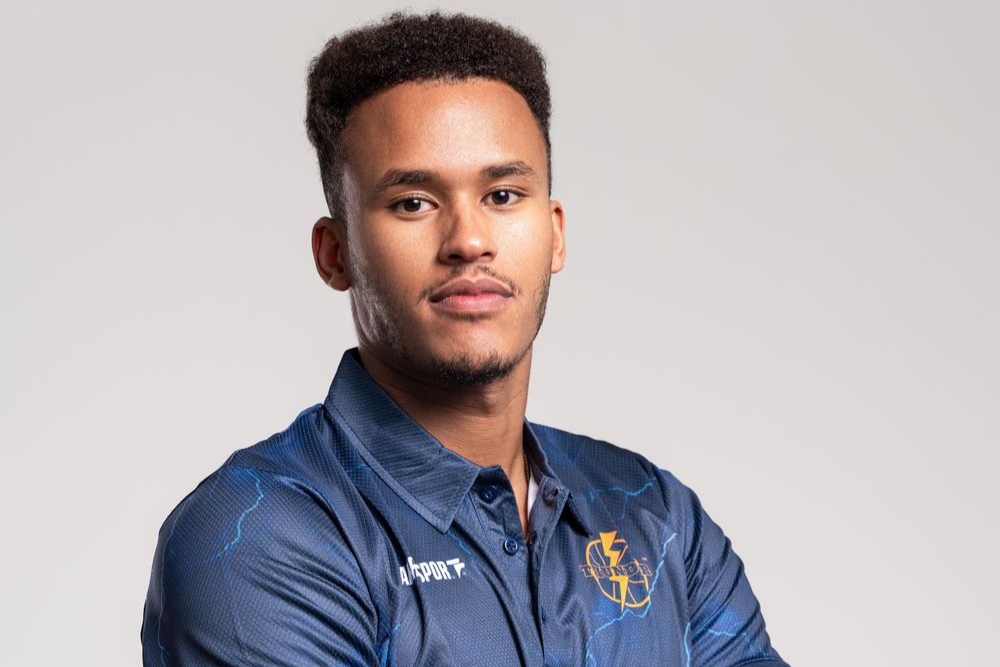
At the centre of that transformation is Marcel Awori, Chief of Staff at Nairobi City Thunder, who has become one of the emerging voices in Africa’s sports-business ecosystem.
Awori’s perspective is refreshingly commercial. In a recent interview, he described the reality of running a professional basketball organisation as a constant balance between strategy, operations, sponsorships, logistics and problem-solving. The club, he says, does not have unlimited capital, making decisions about where to invest and what to prioritise critical to its growth.
That reality illustrates a bigger opportunity.
Basketball is becoming increasingly attractive to brands seeking access to Africa’s young, urban and digitally connected consumers. The Basketball Africa League (BAL), backed by the NBA, has given the sport a continental platform while creating opportunities around sponsorship, broadcasting, merchandising, ticketing, content creation, player development and sports technology.
Nairobi City Thunder has been one of the biggest beneficiaries of that momentum. After Twende Sports acquired the club in 2023, the organisation moved towards a more professional operating model. Thunder subsequently became the first Kenyan club to qualify for the BAL and has won back-to-back Kenyan Basketball Federation Premier League titles.
The numbers also demonstrate the gap between local success and continental competitiveness. Thunder’s 2026 BAL campaign currently stands at two wins and three losses after five games, while the team entered the competition following a 1-5 record in its debut 2025 campaign.
For Awori, however, the bigger prize is not necessarily a trophy.
It is the creation of an ecosystem.
That means turning players into marketable personalities, games into entertainment experiences, supporters into communities and social media audiences into commercially valuable assets. Thunder’s rise illustrates how storytelling has become as important to modern sports organisations as performance on the court. Awori has argued that if organisations do not tell their own stories, somebody else will — or the story will not be told at all.
This creates opportunities well beyond professional playing contracts.
There is space for sports marketers, broadcasters, photographers, content creators, fitness businesses, event companies, merchandise brands, data analysts, sports-tech startups and youth academies. Universities and schools can become talent pipelines, while companies can use basketball to connect with Gen Z and other young consumers.
The competition, however, is becoming stronger.
Rwanda, South Africa, Angola, Egypt, Tunisia and other markets are investing heavily in basketball infrastructure and professional clubs. The BAL’s current standings underline the depth of competition, with established organisations such as Petro de Luanda, Al Ahly and Club Africain operating at a level Kenyan teams are still trying to reach.
That is why Thunder’s ambitions cannot be separated from the development of Kenyan basketball itself.
A stronger domestic league, better facilities, improved governance, structured youth development and greater private-sector investment are necessary if Kenya is to produce several clubs capable of competing internationally. Thunder president Colin Rasmussen has similarly argued that a commercially viable professional club can provide a roadmap for other teams and that Kenya needs a stronger, more professional league to attract investment.
The opportunity across Africa is enormous.
Awori’s vision is of an African basketball industry that is competitive, financially sustainable, locally rooted and capable of attracting international investment. For Nairobi City Thunder, the ambition is even bigger: becoming one of the continent’s biggest basketball brands while developing players who can access opportunities locally and internationally.
That is ultimately what makes the Thunder story bigger than basketball.
The club is testing whether sport can become an investable African business — one where success is measured not only in points and trophies, but in audiences, partnerships, intellectual property, careers and economic value.
If that model succeeds, Nairobi City Thunder may prove that the next big opportunity in African basketball is not simply finding the next great player.
It is building the business around them.