


Borrowing is not inherently a bad thing.
Governments borrow to build infrastructure, finance development and respond to economic shocks.
The problem begins when repayments start consuming money meant for the future.
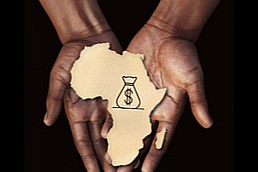
Across Africa, debt has become one of the defining economic policy challenges.
Several governments are now caught between competing priorities: servicing loans while funding healthcare, education and infrastructure.
The pressure is particularly acute because borrowing has become more expensive.
Higher global interest rates and weaker currencies have increased repayment costs for countries with foreign-denominated debt.
The result is shrinking fiscal space.
The World Bank has warned that high debt-service obligations continue to constrain development spending across Sub-Saharan Africa, with debt vulnerabilities remaining elevated in many economies.
But Africa’s debt debate should go beyond asking whether countries should borrow.
The more important question is what they borrow for.
Debt used to finance productive infrastructure can support economic growth.
Borrowing used to cover recurring expenditure creates a more difficult legacy.
Transparency is equally important.
Citizens deserve to know how much governments borrow, under what terms and what economic returns are expected.
The financing landscape is also changing.
African governments are increasingly exploring domestic capital markets, public-private partnerships and alternative financing mechanisms.
The African Development Bank estimates that better domestic resource mobilisation, improved public investment efficiency and deeper financial markets could unlock significant resources for development.
The answer may not simply be less borrowing.
It may be smarter financing.
That requires stronger institutions, better project selection and disciplined public spending.
Africa’s debt challenge is ultimately about balance.
Governments cannot stop investing in development.
But neither can future generations be expected to carry the cost of poorly structured borrowing.
The countries that succeed will be those that treat debt not as free money, but as capital with consequences.