



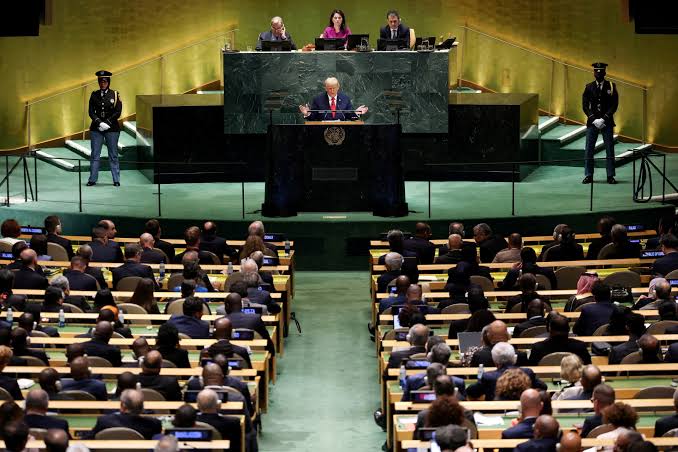
World leaders have gathered in New York for the 81st session of the United Nations General Assembly, with the annual high-level debate taking place from September 22 to 28, 2026, against a backdrop of geopolitical tensions, conflicts, climate pressures and rapid technological change.
This year’s General Assembly is being held under the theme “Restoring trust, managing transformation: A United Nations that delivers for all.” The discussions are expected to focus on how governments and international institutions can respond to a rapidly changing global environment while strengthening multilateral cooperation.
The opening debate also marked a significant moment for UN Secretary-General António Guterres, who is approaching the end of his 10-year tenure. In his final General Assembly address as secretary-general, Guterres warned that global divisions were deepening and called for greater international cooperation on peace and security, inequality, climate change and artificial intelligence.
Guterres placed particular emphasis on the growing influence of artificial intelligence, arguing that governments need stronger international mechanisms to manage emerging AI risks. He called for work towards a multilateral AI risk-management framework and greater cooperation on safety testing, transparency and oversight.
The UN chief also renewed calls for reform of the Security Council, pointing to Africa’s continued absence from permanent representation. He argued that the Council’s structure should better reflect contemporary global political and economic realities.
Climate change and global inequality are also central to the discussions. Guterres urged governments to accelerate the transition away from fossil fuels, increase climate finance and strengthen support for countries vulnerable to climate-related disasters.
Meanwhile, conflicts in Gaza, Ukraine, Sudan and other parts of the world remain prominent issues during the high-level week. The UN secretary-general called for greater protection of civilians, humanitarian access and adherence to international law.
For Africa, the gathering provides an important platform to raise issues including climate finance, development, debt, investment, health and reform of global institutions. UNDP has highlighted a broad programme of African-focused events during UNGA 81, reflecting the continent’s interests in the changing global economic and political order.
Kenya is also participating prominently in the high-level discussions, with President William Ruto scheduled to deliver Kenya’s national address on Wednesday, September 23. His appearance comes as African governments seek greater investment, climate financing and a stronger voice in international decision-making.
Beyond the speeches delivered in the General Assembly Hall, UNGA week brings together heads of state, government officials, business leaders, civil society organisations and international institutions for bilateral meetings, forums and side events.
With discussions continuing through September 28, the 81st UN General Assembly is emerging as a major diplomatic forum for debates over the future of international cooperation — from managing wars and climate risks to governing artificial intelligence and reshaping global institutions.

