

State-backed institutions that invested billions of shillings in Kenya Pipeline Company (KPC) have reportedly made minimal gains from the subsequent sale of shares to Nigerian billionaire Aliko Dangote, raising questions about the returns generated from public funds and workers’ pension savings.
The National Social Security Fund (NSSF) and other state-linked institutions participated in KPC’s initial public offering (IPO), which priced shares at Sh9 each. However, reports indicate that some shares were subsequently sold at approximately Sh9.02 apiece, translating into a gain of just two cents per share before transaction costs.
At that price, an institution that invested Sh1 billion at the IPO would receive approximately Sh1.002 billion from the sale, representing a gross profit of about Sh2.22 million before applicable expenses.
The marginal return has prompted questions about whether the investment delivered sufficient value, particularly given that some of the money involved belongs to workers whose retirement savings are managed by pension funds.
NSSF, one of the country’s largest institutional investors, reportedly invested billions of shillings in the KPC offering alongside other state-backed institutions and pension funds. Their participation was significant in supporting the share sale and expanding public ownership of the company.
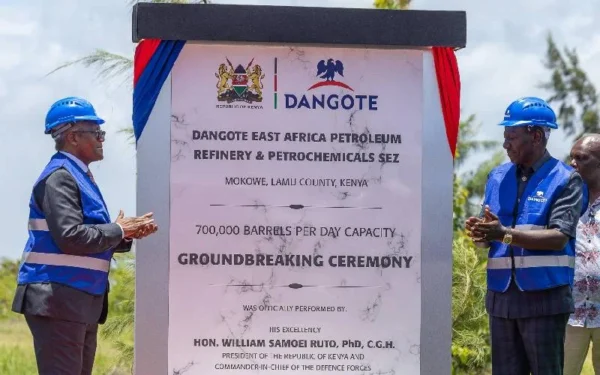
The transaction has since attracted attention following Dangote’s acquisition of a substantial stake in KPC, a strategically important company responsible for transporting and storing petroleum products across Kenya and serving regional markets.
The reported difference between the purchase and sale prices has fuelled debate about the investment decisions made by institutions entrusted with public resources. Critics may question whether the funds could have secured better returns elsewhere or whether the investment was primarily intended to support the government’s privatisation programme.
However, the difference between the IPO price and the reported sale price alone does not establish the full financial outcome. A comprehensive assessment would need to account for the exact prices paid and received, the number of shares sold by each institution, dividends earned during the holding period and transaction expenses.
The precise allocation of shares sold by individual state-backed institutions also remains important in determining the returns each investor realised.
For NSSF and other pension funds, the implications extend beyond a single transaction. Their investment decisions directly affect the long-term performance of funds intended to support workers during retirement. Such investments must therefore be assessed against their financial objectives, risk exposure and expected returns.
Meanwhile, Dangote’s acquisition strengthens his interests in Kenya’s energy sector as he pursues broader investments in the region.
The KPC transaction has consequently raised a fundamental question about public investment: Did state-backed institutions secure sufficient value for workers and taxpayers, or did the pursuit of a successful share sale take precedence over maximising returns?
Ultimately, transparency over the institutions’ investment decisions, the full proceeds realised and the financial rationale behind the transactions will be essential in determining whether the deal delivered value to the people whose money was invested.