


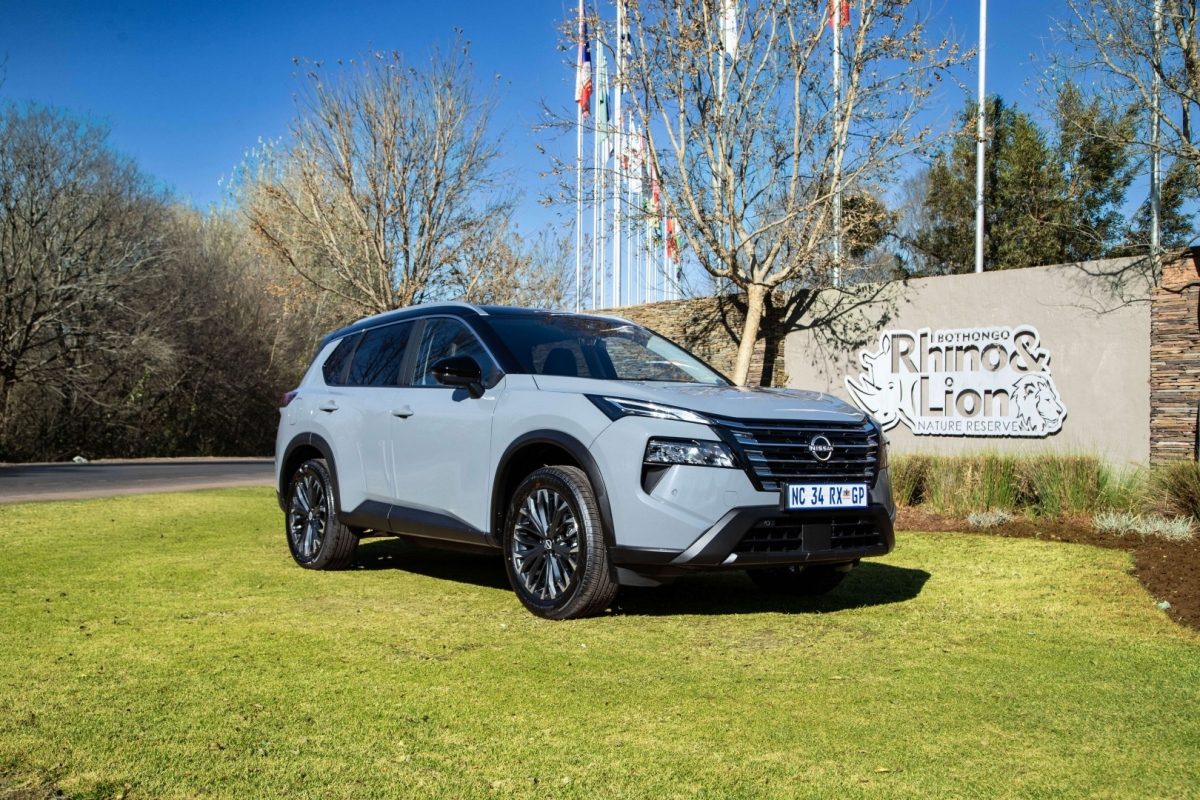
Nissan has launched its new Tekton SUV in South Africa, marking a new phase for the Japanese automaker after ending local vehicle production and shifting towards an import-focused strategy.
The launch on Monday, September 21, is the first in a series of new vehicle introductions Nissan plans for South Africa as it seeks to strengthen its position in Africa’s largest automotive market.
The Tekton starts at R339,999, equivalent to about $20,940, and is manufactured in India. South Africa is the first African market to receive the new model following its global debut in India.
The five-seat SUV is positioned as a more affordable offering in a market where consumer demand for SUVs continues to grow and established manufacturers face increasing competition from Chinese automotive brands.
Nissan’s launch comes only months after the company exited vehicle manufacturing in South Africa. Its former Rosslyn manufacturing plant in Pretoria was sold to Chinese automaker Chery, which formally took control of the facility in July.
The change represents a significant shift for Nissan, which had manufactured vehicles in South Africa for more than five decades. The company is now relying on vehicles produced elsewhere to maintain its presence in the market.
Nissan Africa President Jordi Vila said the company had stopped manufacturing in South Africa as part of a strategy to maximise production capacity at other facilities and improve competitiveness.
The Tekton is powered by either a 1.0-litre turbocharged three-cylinder petrol engine producing 74kW and 160Nm, or a 1.3-litre turbocharged four-cylinder engine producing 120kW and 260Nm. Depending on the version, the vehicle is paired with either a six-speed manual or six-speed dual-clutch transmission.
Nissan has equipped the vehicle with features including a 10.1-inch infotainment screen, Apple CarPlay and Android Auto, six airbags, electronic stability control, ABS, hill-start assist, rear parking sensors and a reversing camera.
The launch is part of a broader product strategy. Nissan has already introduced the new X-Trail in South Africa and plans to introduce an upgraded Navara pickup and the eighth-generation Patrol SUV during the current financial year, with additional models expected from next year.
Nissan’s renewed product push comes as South Africa’s automotive market undergoes significant structural change. Chinese manufacturers have expanded their presence rapidly, competing with established Japanese, European and American brands through competitively priced SUVs, technology-rich vehicles and expanding local manufacturing operations.
That shift is particularly visible at Nissan’s former Rosslyn plant. Chery plans to transform the facility into a manufacturing, export, research and regional operations hub. The Chinese automaker expects to begin vehicle production there in 2027 and has committed to retaining the plant’s 692 existing employees.
Chery also expects the project to generate nearly 3,000 direct and indirect jobs across manufacturing, supply chains and related activities as its South African operations expand.
For Nissan, the challenge is therefore not simply launching new vehicles but maintaining relevance in a market that is becoming increasingly competitive and more price-sensitive.
The Tekton is central to that effort. Nissan says it remains committed to South Africa despite ending local manufacturing, and the company is using the new model alongside a broader product rollout to strengthen its relationship with customers and dealers.
The launch also highlights the changing geography of Africa’s automotive industry. While Nissan has moved production away from South Africa, its new vehicle is being imported from India, while China’s Chery is preparing to manufacture vehicles locally. The developments illustrate how global automotive companies are adopting different strategies to compete for Africa’s growing consumer market.
Nissan’s future in South Africa will now increasingly depend on the performance of its imported vehicles, its ability to compete on price and technology, and the strength of its dealer and customer network as competition from Chinese manufacturers intensifies.