



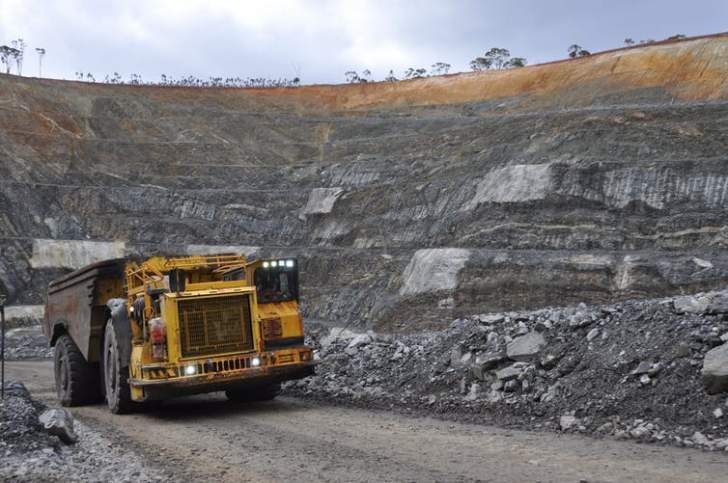
Zimbabwe’s manufacturing sector is showing signs of renewed momentum as investment in mining, particularly lithium, begins to generate wider industrial activity.
The country’s economy grew an estimated 7.6 per cent in 2025, following a drought-induced slowdown the previous year. Manufacturing expanded by 4.2 per cent, while mining grew by 7.3 per cent, supported by continued lithium investment and stronger gold and platinum prices.
The numbers point to an important shift.
Zimbabwe has long struggled with industrial capacity, currency instability, infrastructure constraints and shortages of capital. But increased investment in mineral production is beginning to create demand for equipment, processing, construction, transport and other manufacturing-related services.
Lithium has become particularly important.
Global demand for the battery mineral has encouraged new investment in Zimbabwe’s mining industry, while government policy has increasingly emphasised local processing rather than the export of raw minerals.
That creates an opportunity to connect mining with manufacturing.
Equipment suppliers, chemical processors, engineering companies and manufacturers of mining inputs could all benefit as the industry expands.
The wider economic recovery is also improving factory capacity utilisation.
According to the African Development Bank, improved electricity generation, stronger agricultural production and increased mining investment have supported the recovery in manufacturing and construction.
However, Zimbabwe still faces significant structural constraints.
The country needs greater policy stability, reliable electricity, improved logistics and deeper access to long-term finance if manufacturers are to expand sustainably.
The bigger question is whether mineral wealth can become a foundation for industrialisation rather than another cycle of commodity dependence.
If Zimbabwe can build processing and manufacturing industries around its lithium, gold, platinum and agricultural resources, the impact could extend well beyond the mining sector.
For investors, the opportunity lies in that connection — supplying, processing and manufacturing around the country’s resource economy.
Zimbabwe’s industrial revival may therefore be less about rebuilding the factories of the past and more about designing a manufacturing economy for the minerals and markets of the future.

