



Tunisia offers something increasingly valuable to modern travellers: the ability to combine Mediterranean beaches, ancient history, desert adventures and North African culture within a relatively compact country.
The journey can begin in Tunis, where the old medina provides an introduction to the country’s Arab, Ottoman and Mediterranean influences.
From the capital, travellers can head to Carthage, the ancient city whose ruins sit beside some of the country’s most desirable coastal neighbourhoods.
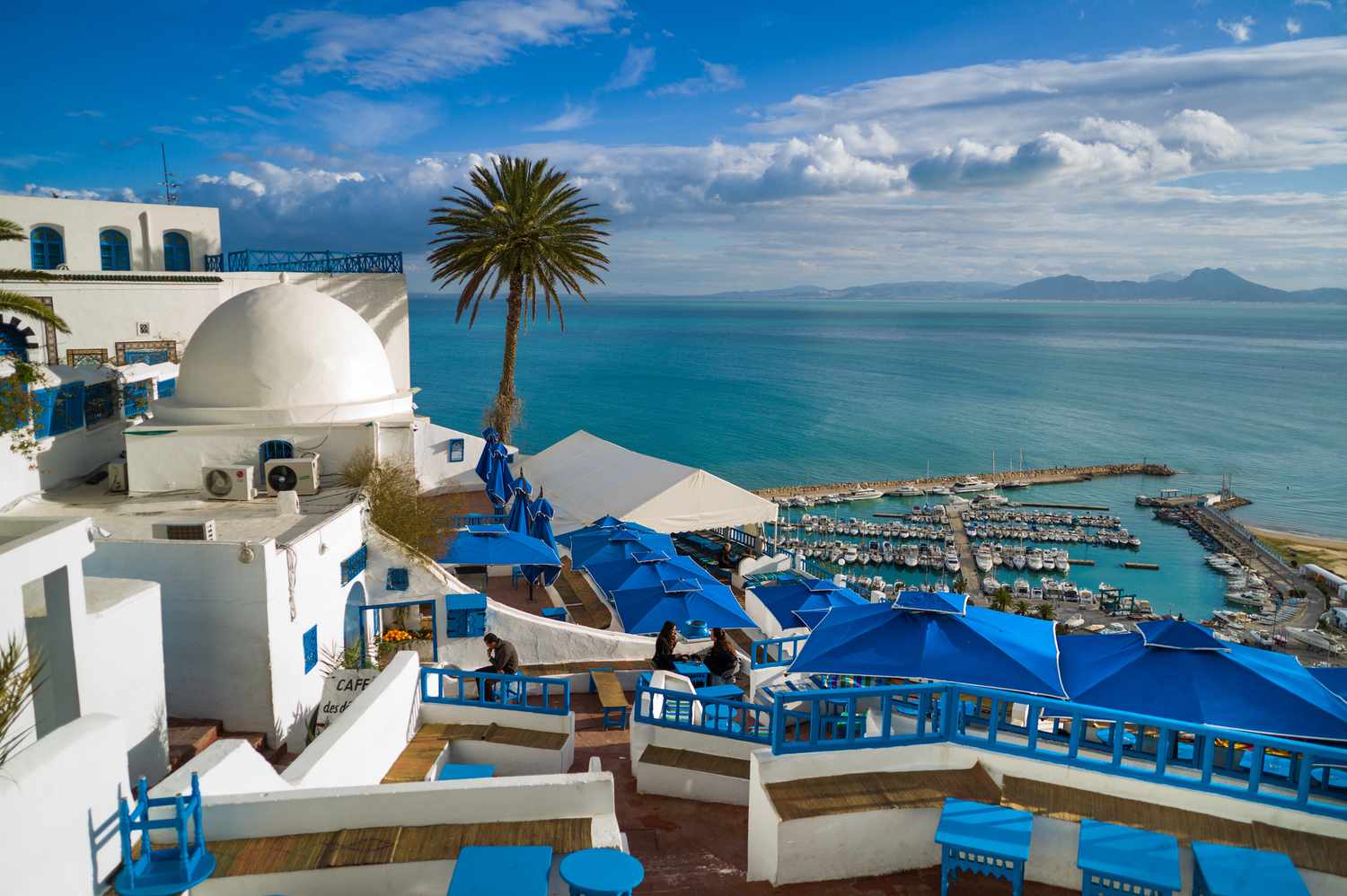
Nearby Sidi Bou Said is perhaps Tunisia’s most recognisable postcard. Whitewashed buildings, blue doors and views across the Mediterranean have made the hilltop village a favourite for photographers and leisure travellers.
The coastline becomes even more attractive around Hammamet, where beaches, resorts and restaurants have established the town as one of Tunisia’s major holiday destinations.
But Tunisia’s story does not end at the coast.
Travelling south takes visitors towards the Sahara, where desert landscapes replace Mediterranean scenery.
Douz, known as the gateway to the Sahara, offers camel excursions and desert experiences, while Tozeur provides access to the dramatic landscapes of southern Tunisia.
History lovers can also explore El Jem, home to one of the best-preserved Roman amphitheatres in the world.
The diversity makes Tunisia particularly attractive to travellers who want more than a beach holiday.
It is possible to spend a morning exploring Roman ruins, lunch in a historic medina and sunset beside the Mediterranean.
Tunisia’s tourism industry has also benefited from its proximity to Europe, competitive accommodation prices and established resort infrastructure.
For African travellers, the country offers a relatively different North African experience — one where Arab, Berber, Roman, Ottoman and Mediterranean influences meet.
Tunisia may not have Egypt’s pyramids or Morocco’s global tourism profile.
Its strength is subtler.
It offers variety without demanding enormous distances — and that makes it one of North Africa’s most underrated journeys.

