


For decades, the computing industry lived by a comforting rule: wait long enough and technology gets cheaper, smaller and more powerful.
That rule is now under pressure.
The global artificial intelligence boom is turning the humble semiconductor into one of the most strategically valuable — and increasingly expensive — pieces of infrastructure on Earth. The result could reshape everything from hyperscale data centres to laptops and smartphones.
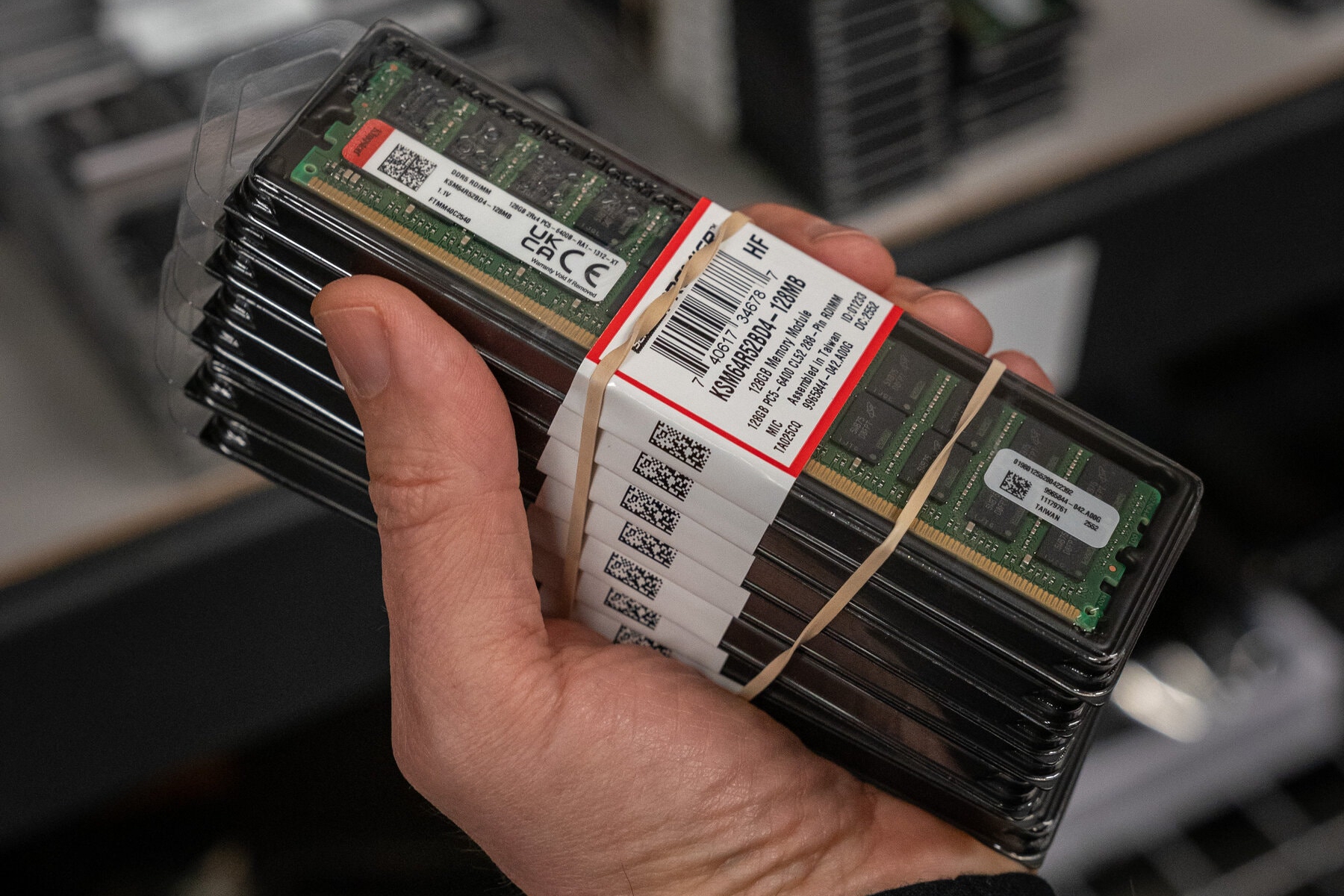
The immediate problem is memory.
High-bandwidth memory, or HBM, has become indispensable to the accelerators powering generative AI. Unlike conventional memory, HBM is designed to move enormous amounts of data between processors and memory at extraordinary speeds. But it is difficult to manufacture, and supply is concentrated among companies such as SK Hynix, Samsung and Micron.
Demand has exploded.
One recent industry estimate puts memory at 50–55 per cent of semiconductor industry revenue, compared with a historical share of roughly 20–30 per cent. DRAM and NAND prices are also climbing sharply.
This is not simply a problem for Nvidia.
It is becoming everyone’s problem.
AI companies are effectively competing with ordinary consumers for semiconductor capacity. Manufacturers naturally want to prioritise the most profitable customers, meaning AI infrastructure can receive preferential access to scarce components.
That is already filtering down to personal computers.
PC shipments recently fell while revenues for some manufacturers increased because companies are selling fewer, more expensive machines. Analysts expect memory shortages and elevated prices to persist for years rather than months.
The irony is striking.
AI was supposed to make computing cheaper and more accessible. Instead, the infrastructure required to run increasingly sophisticated AI is making the underlying hardware more expensive.
And nowhere is this more visible than inside data centres.
The modern AI data centre is no longer simply a warehouse full of servers. It is an industrial-scale computing facility consuming enormous quantities of electricity, advanced cooling systems, networking equipment, storage and specialised processors.
The United States is already expecting record electricity consumption in 2026 and 2027, with AI-intensive data centres among the drivers.
Nvidia, meanwhile, is expanding the computing footprint far beyond traditional markets. In Australia, the company recently announced plans to help build up to 2 gigawatts of AI-related data-centre capacity.
This creates a fascinating new economic equation.
The future of computing will not only be determined by who makes the fastest chip. It will increasingly be determined by who can secure chips, memory, electricity, cooling, data-centre space and network capacity.
That creates an opening for disruption.
Big technology companies are beginning to design their own chips rather than relying entirely on Nvidia. Amazon, Microsoft, Google and Meta have all pursued custom silicon, while Qualcomm recently struck a potential $60 billion AI-chip deal with Amazon.
This could eventually weaken Nvidia’s extraordinary dominance.
But there is another possibility: the industry could fragment.
Instead of one universal processor dominating computing, we may have specialised chips for training AI, inference, robotics, smartphones, autonomous vehicles and enterprise applications. Efficiency could become more important than raw processing power.
That matters because the next frontier is not simply bigger AI models.
It is cheaper AI.
If an AI model can deliver the same result using one-tenth the computing power, its economic value changes dramatically. Companies will increasingly optimise algorithms and hardware together, rather than treating chips as interchangeable commodities.
The pressure will also accelerate the move towards edge computing — putting AI directly into phones, cars, cameras, industrial machines and laptops rather than sending every request to a distant data centre.
That could be one of the biggest disruptions of all.
But there is a geopolitical dimension.
Semiconductors have become strategic assets. Export controls, supply-chain concentration and competition between the US and China are influencing which companies can access advanced processors and memory. China’s AI-chip makers are already facing higher costs because of constrained access to advanced HBM.
The world is therefore entering a period in which computing capacity itself becomes a competitive advantage.
For consumers, that could mean more expensive phones, computers and gaming hardware.
For businesses, it could mean larger technology budgets.
For governments, it means electricity and semiconductor security becoming matters of national strategy.
But expensive chips may ultimately force the industry to become smarter.
Scarcity has a way of producing innovation.
The next great computing breakthrough may therefore not be a chip that is merely faster.
It may be a chip that does more with less.
And in the age of AI, that could prove far more valuable than simply adding more silicon.