


When a patient walks into a pharmacy and buys a packet of medicine, the transaction appears simple.
Behind it, however, lies a complicated international supply chain.
Active pharmaceutical ingredients may come from Asia. Packaging materials can come from different suppliers. The medicine may be manufactured outside Africa, shipped through international ports and eventually distributed to Kenyan hospitals and pharmacies.
That supply chain can become vulnerable when prices rise, currencies weaken or global disruptions interfere with shipping.
Kenya increasingly wants to change that equation.
The country is positioning pharmaceutical manufacturing as a strategic industrial sector, with ambitions to produce more medicines locally and serve markets across East Africa.
Invest Kenya currently identifies more than 30 local pharmaceutical manufacturers and more than 20,000 jobs in the sector. It estimates a pharmaceutical market size of about $765 million by 2030 and reports pharmaceutical exports have grown by more than 30 per cent year-on-year.
The opportunity is therefore both industrial and medical.
Why local production matters
Pharmaceutical manufacturing is different from many other industries because the product is essential.
A shortage of a particular medicine is not simply a commercial inconvenience.
It can affect patient care.
Local production cannot eliminate dependence on imports overnight, particularly for complex medicines and active pharmaceutical ingredients.
But it can strengthen the country’s resilience by ensuring that more essential products are manufactured closer to where they are consumed.
The regional opportunity is equally significant.
Kenya sits in a strategic position for serving East and Central African markets, with established logistics infrastructure and a relatively developed healthcare sector.
A factory in Kenya does not have to sell only to Kenyan hospitals.
It can become part of a regional pharmaceutical supply chain.
From tablets to complex medicines
The simplest way to imagine pharmaceutical manufacturing is a factory producing tablets.
The industry is much broader.
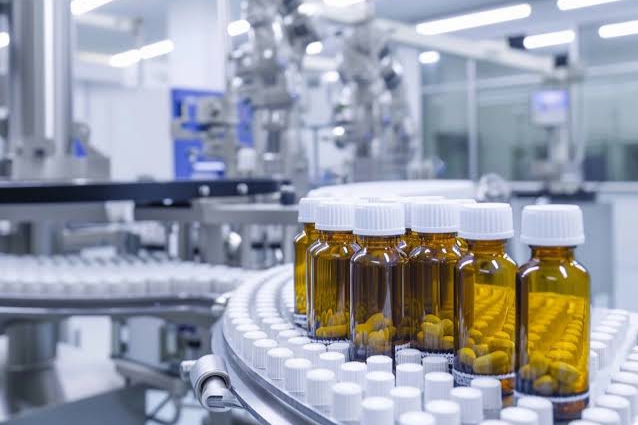
Kenya has opportunities in tablets, capsules, injectables, medical products, active pharmaceutical ingredients and research and development.
Invest Kenya identifies tablet and injectable manufacturing, APIs for essential medicines, regional distribution and R&D as high-potential areas.
The more sophisticated these facilities become, the greater the value retained locally.
A factory producing finished tablets creates jobs.
A facility producing active ingredients, developing formulations and conducting research creates an even deeper industrial ecosystem.
Regulation is part of the factory
Pharmaceutical manufacturing cannot simply be expanded by building factories.
Quality standards are critical.
A medicine must be safe, consistent and effective.
That is why Kenya’s regulatory capacity matters as much as physical infrastructure.
In 2026, the government reaffirmed its intention to strengthen the national regulatory system towards World Health Organisation Maturity Level 3, a move aimed at improving confidence in locally manufactured medicines.
This is important for exports.
A pharmaceutical manufacturer trying to sell across Africa needs regulators and buyers to trust its products.
Internationally recognised standards therefore become an industrial asset.
The human capital question
A pharmaceutical plant is not simply a building filled with machines.
It needs pharmacists, chemists, microbiologists, engineers, quality-control specialists, technicians and regulatory professionals.
This makes the industry particularly valuable for a country seeking skilled employment.
It also creates opportunities for universities and technical institutions to align training with industrial demand.
Kenya already has a significant scientific and medical talent pool.
The challenge is connecting that talent to manufacturing.
A graduate who might otherwise leave the country for pharmaceutical or laboratory work abroad could potentially build a career in local drug production, quality assurance or research.
The economics of scale
The biggest challenge will be competitiveness.
Imported medicines can be produced cheaply at enormous scale.
Kenyan manufacturers therefore need to identify where local production makes commercial sense.
Essential medicines with predictable demand are one area.
Regional procurement can provide another.
Government purchasing policies can also influence the market, although industrial support must be designed carefully so that patients do not end up paying more for medicines simply because they are locally produced.
The objective should be competitive local manufacturing, not manufacturing protected from competition indefinitely.
Research could change the game
The greatest opportunity may eventually lie beyond generic medicines.
Kenya has a growing technology and research ecosystem.
Combining pharmaceutical manufacturing with biotechnology, medical research and digital health could create new possibilities.
Clinical research, diagnostics and pharmaceutical production can reinforce one another.
A strong research ecosystem can identify local health needs.
Manufacturers can develop products for those needs.
Hospitals can provide clinical expertise.
Universities can supply researchers.
The result is an industrial-health ecosystem rather than an isolated factory.
A regional manufacturing hub
Africa’s pharmaceutical market is expected to grow as populations expand, urbanisation accelerates and healthcare systems develop.
Yet the continent remains heavily dependent on imported medicines.
That gap represents an opportunity for countries capable of developing reliable manufacturing capacity.
Kenya’s competitive advantage is not simply population.
It is its combination of logistics, finance, healthcare institutions, scientific expertise and regional commercial links.
If those advantages are combined effectively, pharmaceutical manufacturing could become one of Kenya’s most important specialised industries.
The factory beyond the factory
There is also a social dimension.
A pharmaceutical manufacturing plant supports more than its direct employees.
It requires packaging suppliers, logistics companies, equipment maintenance firms, laboratories, chemical suppliers, security services and professional consultants.
Every layer creates economic activity.
That is the broader meaning of industrialisation.
The goal is not simply to replace a shipment of imported tablets with a Kenyan-made tablet.
It is to build the ecosystem that makes the tablet possible.
Kenya’s pharmaceutical ambition is therefore about more than medicine.
It is about whether the country can move from being primarily a consumer of sophisticated health products to becoming a producer.
That transition will require investment, patient capital, rigorous regulation, skilled workers and access to regional markets.
But if it succeeds, the benefits will reach far beyond the factory gates.
They will be felt in hospitals, pharmacies, laboratories, universities and ultimately by patients who depend on a reliable supply of essential medicines.